Most AI automation projects fail before launch because the scope is vague, ownership is split, and teams try to automate three departments at once. The first production release should be smaller and much stricter.
Start with one measurable workflow
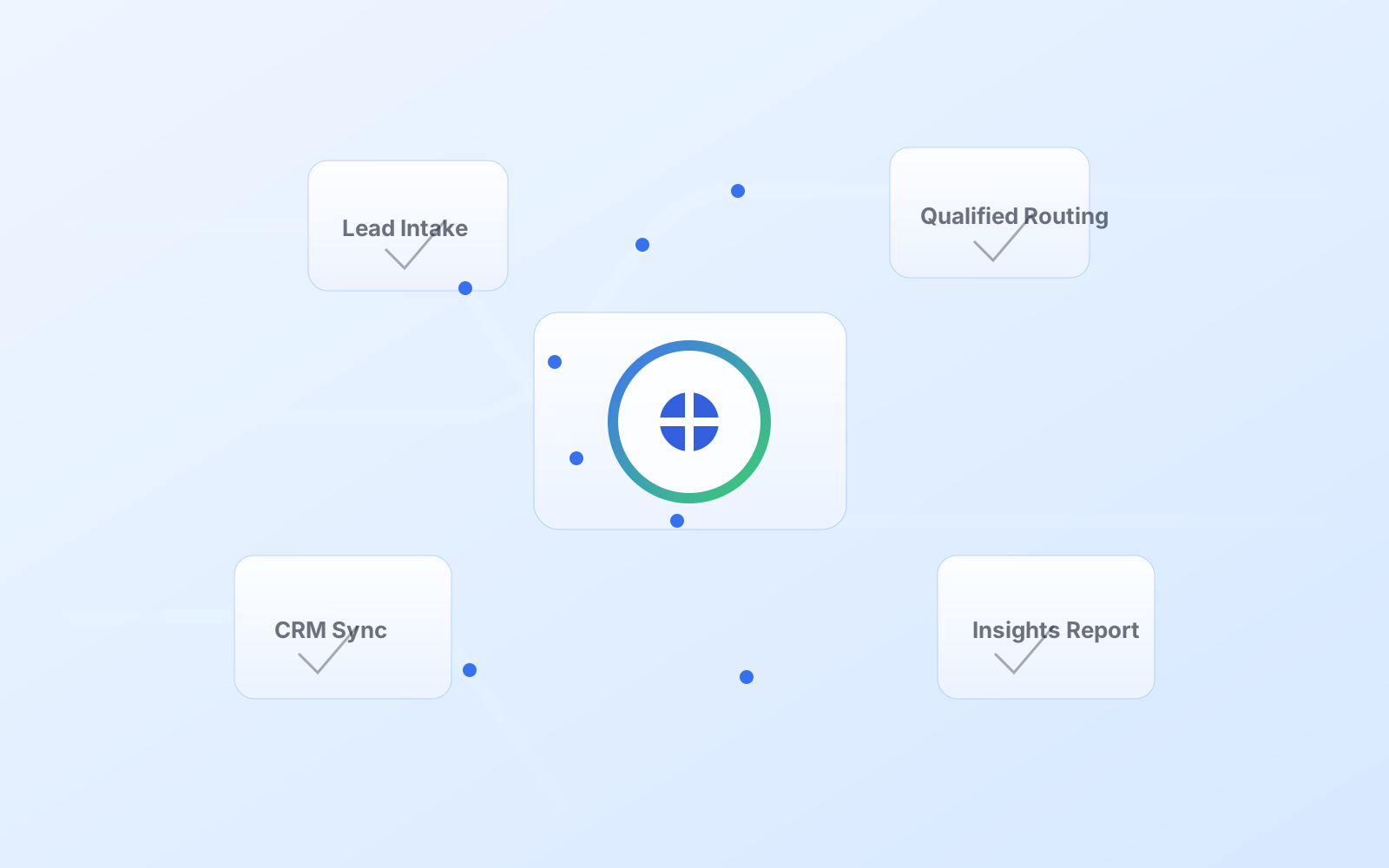
Pick one flow that already has traffic, obvious friction, and a clear owner. Lead intake, qualification, routing, follow-up, and CRM update logic are usually the best starting points because the before-and-after delta is easy to measure.
- Choose a workflow with weekly volume and a visible bottleneck.
- Assign a single business owner and a single technical owner.
- Define the exact output the automation must create.
Lock the first KPI set
You do not need a dashboard program for day one. You need four numbers: response time, qualified lead rate, handoff time, and manual hours spent.
Rule of thumb
If the team cannot agree on the success metric in one meeting, the scope is still too broad.
Sequence delivery by risk
Move from least risky to most risky: data cleanup, routing logic, notifications, human review, and only then autonomous actions. This keeps the launch safe while still delivering visible gains quickly.
“The first release should prove throughput and control, not intelligence for its own sake.”